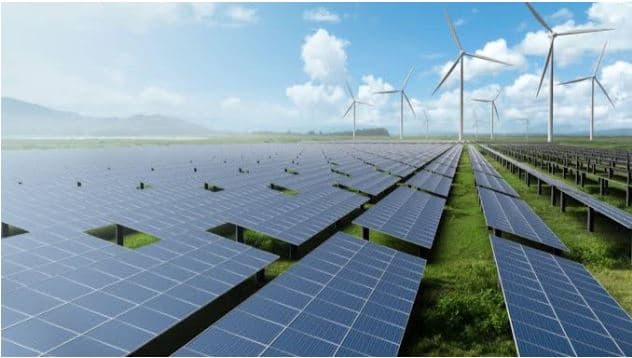

Kenya has spent years building one of Africa’s strongest renewable electricity systems. Geothermal, hydro, wind and solar already play a major role in the country’s generation mix, and that progress is worth recognising. But as renewable capacity continues to grow, the next challenge is becoming increasingly clear: generating renewable energy is only one half of the equation. The other half is making sure that energy is available when demand actually occurs.
Kenya recently recorded a new peak electricity demand of 2,549 MW, according to KenGen Kenya. At the same time, the country continues to add variable renewable energy such as solar and wind. This creates an important engineering challenge because electricity generation and electricity demand do not always peak at the same time.
Solar generation is highest around the middle of the day, while many commercial, industrial and residential loads continue well into the evening. Wind generation also varies with prevailing conditions. The power system must therefore continuously balance supply and demand, even when renewable generation fluctuates. When that balance is not naturally available, the system has to rely on other generation sources, imports, demand management or energy storage.
Battery Energy Storage Systems (BESS)
This is why battery energy storage systems, commonly known as BESS, are becoming a much more serious part of Kenya’s energy conversation. At the Kenya Energy Transition Forum in August 2026, industry discussions indicated that Kenya could eventually require around 1,000 MW of battery storage capacity as demand rises and more variable renewable generation is added to the grid.
The direction is already visible in new projects. The Siruai project in Kajiado combines 100 MW of wind generation with a 50 MWh battery energy storage system. This is significant because it reflects a broader shift in how renewable projects are being designed. Generation and storage are increasingly being considered as parts of the same energy system rather than as separate technologies.
Storage at Every Level
However, the storage conversation should not remain at national-grid level. The same problem exists inside a factory, hotel, hospital, office complex or home. A commercial facility may generate excess solar energy in the middle of the day and then consume substantial electricity later in the evening when solar production has dropped. The engineering problem is fundamentally the same: energy is available, but not necessarily at the exact time it is required.
This means the traditional question, “How many solar panels can we install?” is no longer enough. A better question is, “How do we use every available unit of energy as effectively as possible?” That distinction changes the entire design process.
Excess daytime solar can be stored in batteries and used later, but storage is only one option. Energy can also be exported through an appropriate grid arrangement, or loads can be shifted into solar-production hours. Water pumping can be scheduled during the day, thermal loads can be timed more intelligently, and refrigeration, cooling, EV charging or certain industrial processes can sometimes be aligned with periods of high solar output.
In other words, batteries are not the only form of energy flexibility. Sometimes the cheapest “battery” is simply moving a flexible load from 7 p.m. to 1 p.m. That may sound simple, but it is exactly why proper energy analysis matters before equipment is selected.
Why Energy Design Matters
Installing batteries without studying the load profile can create an expensive system with poor utilisation. Likewise, installing a large solar array without understanding when electricity is consumed can lead to significant excess generation that produces limited economic value. A technically impressive system is not necessarily an economically intelligent one.
Good energy design therefore starts with data. Before determining PV capacity or battery size, an engineer should understand peak demand, daily energy consumption, hourly load behaviour, critical and non-critical loads, daytime versus nighttime consumption, outage exposure, electricity tariff structure, available renewable generation and the operational flexibility of the facility.
Only after understanding these variables can the correct combination of solar generation, battery storage, grid supply, backup generation and demand management be determined. This is particularly important for Kenyan businesses because electricity is rarely just another utility bill. It is an operational input.
A power interruption can stop production. Voltage instability can affect sensitive equipment. A diesel generator consumes fuel every time it runs. A poorly designed solar system may reduce electricity purchases while still leaving the business exposed during outages or peak demand periods.
The Bigger Objective
The objective should therefore be larger than simply installing solar panels. The objective should be to design an energy system capable of managing when energy is generated, when it is consumed, when it is stored and when the grid is used.
Kenya’s energy policy is increasingly recognising this reality. Energy storage, smart grids and distributed energy systems are now becoming part of the broader conversation around reliability, grid stability and renewable-energy integration. That represents an important evolution in how the energy transition is being understood.
The first phase of the renewable-energy transition was largely about adding cleaner generation capacity. The next phase will increasingly be about control: control over when energy is available, how it is consumed, how peak demand is managed and how businesses respond to interruptions.
For Kenya, the important question is therefore no longer simply how much renewable energy we can generate. The more important question is how intelligently we can store, manage and use it.
That is where the next chapter of Kenya’s energy transition begins.
Lavan Solar Systems Limited — Energy systems designed around how you actually use power.